Hundredfold Canada
20 Partridgeberry Seeds – Mitchella repens | Native Groundcover for Eastern Canada & USA
20 Partridgeberry Seeds – Mitchella repens | Native Groundcover for Eastern Canada & USA
Impossible de charger la disponibilité du service de retrait
Product Overview
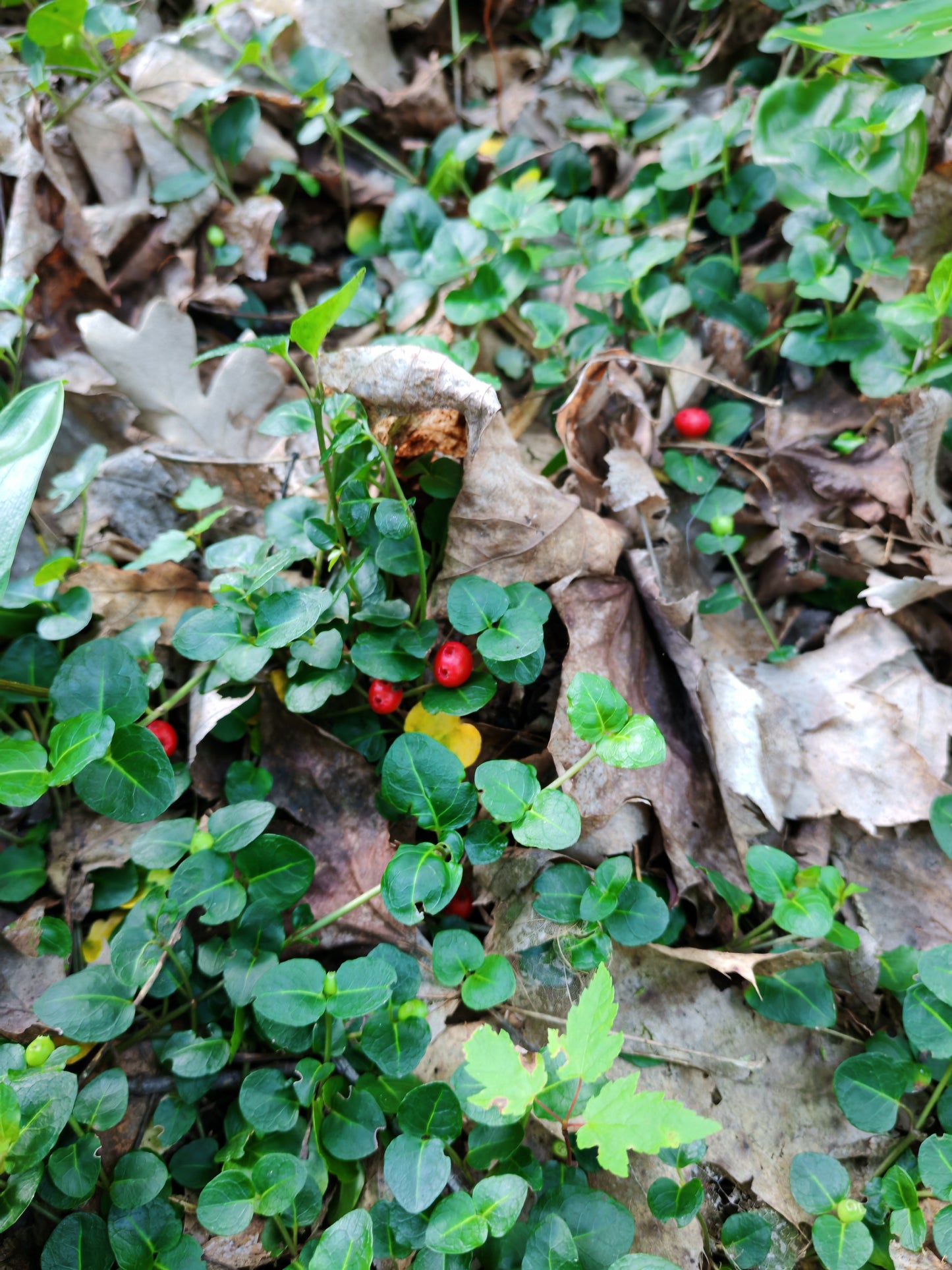
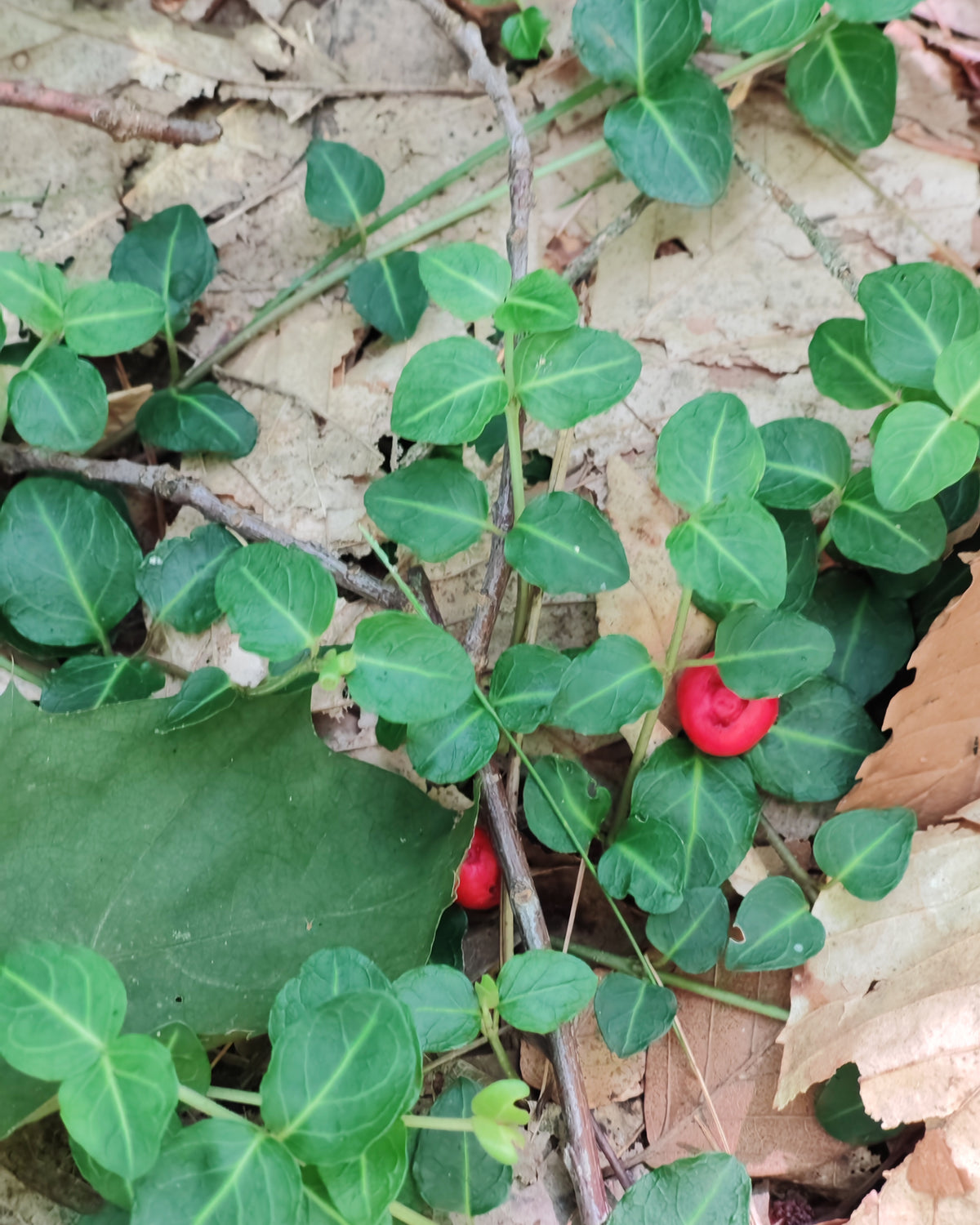
Mitchella repens, commonly known as Partridgeberry, Twinberry, or Running Box. A delicate, creeping perennial native to eastern Canada. Prized for its ornamental evergreen foliage, fragrant flowers, and scarlet berries that attract wildlife. This listing includes 20 seeds.
Botanical Information
- Botanical Name: Mitchella repens
- Common Names: Partridgeberry, Twinberry, Running Box, Partridge Berry, Squawvine
- Family: Rubiaceae
- Native Range: Eastern Canada and eastern United States
Hardiness & Growth
- Hardiness Zones: USDA 3–8
- Height: Approximately 2 inches (5 cm)
- Spread: 6–14 inches (15–35 cm)
- Growth Habit: Creeping, mat-forming groundcover that roots at nodes
- Growth Rate: Slow
- Sun Exposure: Partial shade to full shade
- Soil Preference: Humus-rich, moist, acidic, well-drained soils
- Moisture Requirements: Prefers consistent moisture; somewhat drought-tolerant once established
Features
- Evergreen foliage with dainty, rounded, glossy dark green leaves with pale veins
- Fragrant, trumpet-shaped pinkish-white flowers blooming in pairs from spring to late summer
- Scarlet berries ripen in late summer and often persist through winter
- Distinctive feature: two flowers fuse to produce a single berry with two "dimples"
- Berries are edible but mild in flavour
- Beloved by partridges and other wildlife
Ecological Value
- Scarlet berries provide winter food for birds (ruffed grouse, quail, turkeys) and small mammals
- Flowers attract bees and pollinators
- Excellent for erosion control in shaded or sloped areas
- Non-aggressive, non-invasive ground-cover
Landscape Uses
- Woodland gardens and shaded borders
- Under-planting acid-loving shrubs (rhododendrons, azaleas, blueberries)
- Rock gardens and terraria
- Naturalized areas and ecological restoration
- Native alternative to invasive ground-covers
Seed Propagation Note
Partridgeberry can be propagated from seed, though it is generally considered slow-growing and can be more challenging to establish from seed than from cuttings or division. Cuttings root easily and are a more reliable propagation method for home gardeners.
Seed Preparation & Germination
For best results with seed propagation:
1. Sow seeds outdoors in late fall for natural cold stratification over winter
2. Alternatively, mix seeds with moist sand or peat moss and refrigerate at 2–5°C (35–40°F) for 60–90 days
3. After stratification, sow seeds on the surface of moist soil—do not cover deeply, as light aids germination
4. Keep soil consistently moist; germination is slow and may occur in spring
5. Maintain in partial to full shade
What You Receive
- 20 seeds of Mitchella repens (Partridgeberry / Twinberry / Running Box)
Share